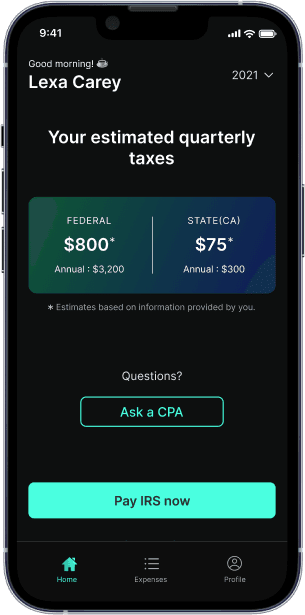
Quarterly tax deadline is Jan 15. See how much you owe penalties
1099 Tax Calculator

Are you self-employed?
This includes freelancers and business owners.
How to Document Goodwill Donations for Taxes: A Guide to Recording Your Contributions
Giving donations to Goodwill is a fantastic method to support a worthy cause when it comes to giving back to the community. However, it’s important to properly document your donations if you want to claim a tax benefit for them. We’ll walk you through the steps of recording your Goodwill contributions in this post, including how to handle valuable things, the significance of obtaining a donation receipt, and information to keep on file.
Table of contents
Understanding Goodwill Donations and Tax Deductions
Donating to Goodwill can have a significant impact on your community, and it can also provide you with tax benefits. To understand how Goodwill donations and tax deductions work, it’s essential to know the basics. Here are some key points to consider:
- Fair Market Value: The fair market value of an item is the price that a willing buyer would pay for it. When donating to Goodwill, it’s crucial to determine the fair market value of your donated items to claim the correct tax deduction. This ensures that you are accurately reflecting the worth of your contributions on your tax return.
- Charitable Contributions: Goodwill is a qualified charitable organization, which means that your donations are eligible for tax deductions. To qualify for a tax deduction, you must itemize your deductions on Schedule A (Form 1040). This process allows you to list your charitable contributions and potentially reduce your taxable income.
- Donation Receipt: When you donate to Goodwill, you’ll receive a donation receipt. This receipt is essential for claiming a tax deduction, as it provides proof of your donation. Make sure to keep this receipt in your records, as it will be necessary when filing your tax return.
- Noncash Charitable Contributions: Goodwill accepts noncash donations, such as clothing, household items, and furniture. These donations can be deducted from your taxes, but you must follow the IRS regulations. Ensure that you are familiar with the rules regarding noncash charitable contributions to maximize your tax benefits.
The Value of Obtaining a Goodwill Donation Receipt
The first step in recording your philanthropic gift is obtaining a donation receipt from Goodwill. This receipt is necessary to claim atax deductionand acts as evidence of your donation. What you should know is as follows:
- Receipt Availability: Any Goodwill store or donation location will provide you with a contribution receipt at the time of your gift. You can also make an online request if you'd like. A tax receipt is not the same as the donation receipt you receive at the time of giving, although the latter is still helpful. You must use the donation receipt ID number on the original receipt to register your donation on Goodwill's website in order to receive your tax receipt.
Information to Add to Your Records of Donations
Maintaining thorough records of your gifts is essential to ensuring you can claim them on your tax return. The following are the essential details to mention:
- Note the date on which you made the donation.
- Please make a note of your name and current address.
- Donation Details: Indicate how many boxes and bags you gave as well as the items donated.
- Tax Year: Indicate which tax year the gift was made.
- Tax Receipt Value: Calculate how much your donation would be worth on the market. To assist you in figuring out this worth, Goodwill offers a contribution value guide.
- Other Information: Please explain any donated items in the “Other” box if they are not clothing, housewares, or furniture.
When High-Value Items Require Additional Fair Market Value Appraisal
You must include a qualified appraisal with your tax return if you are donating items valued at more than $5,000. What you should know is as follows:
- IRS Form 8283: Noncash charitable contributions exceeding $5,000 need the completion of IRS Form 8283. A qualified appraisal and the signatures of the appraiser and a charity representative are required for this form. A thorough description of the object, its condition, and its fair market worth must all be included in the assessment. Seeking advice from a qualified appraiser who can offer an appropriate valuation is advised. For more information oncharitable contributiondeductions, refer to the relevant guidelines.
How to Maintain an Extensive Donation List for Tax Purposes
For tax filing purposes, it is essential to maintain a thorough record of the items you have contributed. Here's how to accomplish it:
- Save Receipts: Donation receipts are proof of donation, so maintain them at all times.
- Document Items: Provide a list of every item you contributed, along with its approximate worth and condition.
- Use a Value Guide: Goodwill offers a value guide for donations that shows the average cost of frequently given goods. This might assist you in determining your donations' fair market worth.
- Photographic Evidence: Think about snapping pictures of the things you give away. If necessary, this can support your valuation.
- Credit Card and Bank Statements: Save credit card and bank statements that document the transactions associated with your contributions.
Documentation Needed for Valuable Contributions to Qualified Organizations
Additional paperwork is needed for high-value donations in order to guarantee that you can deduct the entire amount. What you need is as follows:
- Contemporaneous Written Acknowledgment: The charity must provide a contemporaneous written acknowledgment for contributions exceeding $250. A description of the items, the donation amount, and a disclaimer that no goods or services were rendered in return for the donation should all be included.
- Form 8283: As previously stated, you must fill out Form 8283 and provide a qualified appraisal if your donation exceeds $5,000.
How to Fill Out IRS Form 8283 for Noncash Charitable Contributions
The Internal Revenue Service (IRS) requires detailed information for noncash charitable contributions exceeding $500, which is reported using Form 8283.
Following these steps will make filling out Form 8283 simple:
- Section A: Provide your name, address, and Social Security number in Section A.
- Section B: Provide a description, condition, and estimated worth for each item you contributed.
- Section C: List each item separately if you are claiming a deduction for more than one item.
- Appraiser Information: Provide the name, address, and signature of the appraiser.
- Charity Details: Provide the name, address, and identification number of the charity.
- Donation Acknowledgment: Fill out the Donation Acknowledgment form if your donation is more than $5,000. In addition to providing their signature, title, and signing date, the charity must confirm that the gift receipts match the filled form.
Reporting Your Donations on Your Tax Return
Reporting your Goodwill donations on your tax return is a straightforward process. Here’s what you need to know:
- Itemize Deductions: To claim a tax deduction for your Goodwill donations, you must itemize your deductions on Schedule A (Form 1040). This involves listing all your deductible expenses, including charitable contributions, to potentially lower your taxable income.
- Form 8283: If your noncash donations exceed $500, you’ll need to complete Form 8283, Noncash Charitable Contributions. This form requires you to list the items you donated, their fair market value, and the date of the donation. Providing detailed information ensures that your deductions are accurately recorded.
- Tax Receipt: Attach your Goodwill donation receipt to your tax return as proof of your donation. This receipt is crucial for substantiating your charitable contributions and ensuring that you can claim the appropriate tax deduction.
- IRS Regulations: Familiarize yourself with IRS regulations regarding charitable contributions, such as Publication 526, Charitable Contributions, and Publication 561, Determining the Value of Donated Property. Understanding these guidelines will help you comply with IRS requirements and maximize your tax benefits.
Maximizing Your Tax Benefits
To maximize your tax benefits when donating to Goodwill, consider the following tips:
- Keep Accurate Records: Keep accurate records of your donations, including receipts, appraisals, and photographs. This will help you determine the fair market value of your donated items and ensure you’re claiming the correct tax deduction. Detailed documentation is essential for substantiating your charitable contributions.
- Consult a Tax Professional: If you’re unsure about how to claim a tax deduction for your Goodwill donations, consult a tax professional. They can help you navigate the process and ensure you’re taking advantage of all the tax benefits available to you. Professional advice can be invaluable in optimizing your tax situation.
- Qualified Organizations: Make sure you’re donating to qualified organizations, like Goodwill, to ensure your donations are eligible for tax deductions. Only contributions to qualified organizations can be deducted on your tax return, so verify the status of the charity before donating.
- Tax-Deductible Donations: Remember that not all donations are tax-deductible. Only donations to qualified organizations, like Goodwill, are eligible for tax deductions. Be aware of the types of contributions that qualify to avoid any issues when filing your tax return.
By following these tips and understanding the basics of Goodwill donations and tax deductions, you can maximize your tax benefits and support a great cause.
The Value of Maintaining Goodwill Receipts for Inspections
Maintaining your Goodwill receipts is essential for audits as well as tax filing. This is the reason:
- Donation Proof: The receipt is evidence that you actually made the donation.
- Value Estimation: It assists you in determining the donations' fair market value.
- Audit Support: Having thorough documentation and receipts can assist you prove your charity donations in the event of an audit. For more insights onGoodwill donations deductions, explore the available resources.
Final Thoughts
If you follow these steps, it's easy to keep track of your Goodwill donations. You can make sure that you're optimizing your charitable contributions and being ready for any prospective audits by maintaining thorough records, acquiring the required receipts, and being aware of the requirements for high-value items. Recall that in order to prevent any problems during tax season, it is always preferable to be careful and comprehensive while recording your contributions.
Extra Advice
- Speak with a Tax Counselor: If you have any questions about any step of the procedure, think about speaking with a tax counselor who can offer tailored advice.
- Preserve Digital Documents: Although paper receipts are acceptable, digital records might be easier to maintain and more convenient to preserve.
- Remain Organized: To make it simpler to find your donation records when you need them, keep them all in one location, whether digitally or physically.
You'll be ready to properly record your Goodwill contributions and get the tax deductions you are entitled to if you go by these pointers and recommendations. Have fun making a donation.
Additionally, if you are considering other types of deductions, you might want to learn abouthow to deduct education expensesor understand ifgifts are tax deductible.
What’s FlyFin?


Expert tax CPAs ensure 100%-accurate tax filing

A.I. finds every tax deduction, eliminating 95% of your work

On average users save $3,700