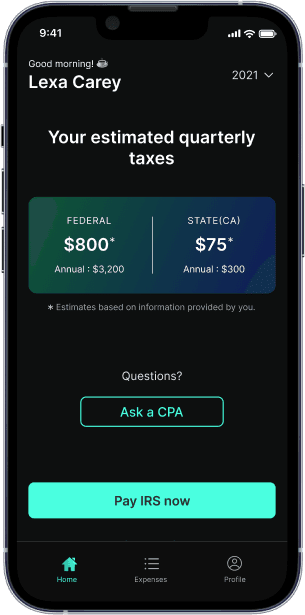
Quarterly tax deadline is Jan 15. See how much you owe penalties
1099 Tax Calculator

Are you self-employed?
This includes freelancers and business owners.
Estimating Your Uber Taxes: Using an Uber Tax Calculator for Quarterly Taxes
It can be difficult to handle your taxes as a self-employed Uber driver. However, you may easily manage this procedure if you have the appropriate tools and information. Estimating your quarterly taxes depending on your earnings is the first step. Making estimated tax payments is crucial, especially for self-employed individuals, to avoid potential penalties from the IRS. Here’s how to accomplish it:
Table of contents
Understanding Self-Employment Taxes for Uber Drivers
As an Uber driver, you are considered self-employed and are required to pay self-employment taxes on your earnings. Self-employed individuals, including Uber drivers, must estimate and pay taxes quarterly. Self-employment taxes are used to fund Social Security and Medicare, and are typically paid by both the employer and employee in a traditional employment arrangement. However, as a self-employed individual, you are responsible for paying both the employer and employee portions of self-employment taxes.
What is Self-Employment Income?
Understanding Your Self-Employment Status
As an Uber or Lyft driver, you are considered self-employed and are required to report your income and expenses on your tax return. This means that you are responsible for paying self-employment taxes, which include both the employer and employee portions of payroll taxes. Understanding your self-employment status is crucial to ensure that you are meeting your tax obligations and taking advantage of available tax deductions.
As a self-employed individual, you are considered an independent contractor and are not entitled to the same benefits as employees, such as health insurance and paid time off. However, you have the flexibility to set your own schedule and work at your own pace. It’s essential to keep accurate records of your income and expenses to ensure that you are reporting your self-employment income correctly and taking advantage of available tax deductions.
Tracking Your Income and Expenses
Accurately tracking your income and expenses is vital for any self-employed Uber or Lyft driver. This practice ensures that you report your self-employment income correctly and take full advantage of available tax deductions. You can use various methods to keep track of your finances, including spreadsheets, apps, and accounting software.
When tracking your income, make sure to include all earnings from Uber or Lyft, such as tips and bonuses. Additionally, keep a detailed record of your expenses, including gas, vehicle maintenance, and other business-related costs. By maintaining accurate records, you can ensure that you are reporting your self-employment income correctly and maximizing your tax deductions.
When to Submit Quarterly Estimated Tax Payments to Prevent Fines
Avoiding fines and interest requires timely filing of your quarterly tax payments. Uber drivers are classified as independent contractors and must handle their taxes independently. When to file is as follows:
- Quarterly Payment Due Dates: If you anticipate owing $1,000 or more in taxes for the year, you must submit anticipated tax payments to the IRS. Uber does not withhold taxes from their payments, and drivers receive a 1099 form instead of a W-2 form. The following year’s April, June, September, and January 15th are the due dates for these payments. The deadline is moved to the next working day if any of these dates coincide with a weekend or federal holiday.
- Safe Harbor Rule: You can apply thesafe harbor ruleto avoid fines. According to this rule, you won’t be penalized if you pay 90% of your tax liability for the current year or 100% of your tax liability from the previous year (or 110% if your adjusted gross income exceeds $150,000). In the event that your income fluctuates greatly over the year, this provision offers a safety net.
- Correcting for Earnings Variations: Seasonal variations, events, and weather can all have a big impact on driving income. You must account for these adjustments in order to determine your quarterly taxes. Make sure you’re complying with the safe harbor rule by updating your income information and recalculating your estimated taxes on a regular basis.
How to Determine Quarterly Taxes With Accuracy for Self Employment Income
It takes more than just entering numbers to get an accurate estimate of your quarterly taxes. As self-employed independent contractors, rideshare drivers need to be aware of filing quarterly estimated income taxes if they expect to owe more than $1,000, since taxes are not automatically withheld as they would be for traditional employees. Here’s how to do it correctly:
- Inputting Your Earnings and Costs: Ensure that you accurately enter all of your earnings and costs when utilizing a tax calculator. This covers all of your earnings from driving as well as any tips, bonuses, and company expenditures. Your estimate will be more accurate if you provide more specific information.
- Preparing for Income Variations: As previously stated, driving income might vary greatly. Review your income data on a regular basis and modify your estimations to account for these changes. This could entail putting aside more cash during busy times and less during slow ones.
- Using Previous Data: To project your future earnings if you have been driving for Uber for a long, use previous data. By doing this, you can prevent underpayment fines and provide more accurate estimates.
Using an Uber Tax Calculator
An Uber tax calculator can be an invaluable tool for estimating your tax liability and ensuring that you set aside enough money for taxes. These calculators help you estimate your self-employment tax, income tax, and other tax obligations.
When using an Uber tax calculator, it’s crucial to enter your income and expenses accurately to get a precise estimate of your tax liability. Consider consulting with a tax professional to ensure that you are meeting your tax obligations and taking full advantage of available tax deductions. This proactive approach can help you avoid surprises and stay on top of your tax responsibilities.
Claiming Business Expenses and Tax Deductions
As a self-employed Uber driver, you are eligible to claim business expenses and tax deductions on your tax return. These deductions can help reduce your taxable income and lower your self-employment taxes.
What Expenses Can Uber Drivers Deduct?
Understanding Tax Forms and Schedules
As a self-employed Uber driver, you will need to file several tax forms and schedules with your tax return.
An Uber tax summary is essential for accurate tax reporting. It includes critical information such as total online miles driven, which is vital for calculating deductions and understanding income from ridesharing services. This summary helps ensure that all necessary details are captured for proper tax preparation.
Which Tax Forms Do Uber Drivers Use?
Filing Your Tax Return
As a self-employed Uber or Lyft driver, you are required to file a tax return and report your self-employment income. You will need to file Form 1040 and attach Schedule C, which reports your business income and expenses.
When filing your tax return, be sure to include all of your self-employment income and expenses, including tips and bonuses. Claim any available tax deductions, such as the standard mileage deduction or actual car expenses. Keeping accurate records of your income and expenses is essential to ensure that you are reporting your self-employment income correctly and taking advantage of available tax deductions.
Key Differences Between 1099 and W2 Employment
As a self-employed Uber or Lyft driver, you receive a 1099 form at the end of the year, which reports your earnings. This is different from a W2 form, which is received by employees and reports their income and taxes withheld.
The key differences between 1099 and W2 employment include:
- Tax Withholding: As a 1099 worker, you are responsible for paying your own taxes, whereas W2 employees have taxes withheld from their paychecks.
- Benefits: As a 1099 worker, you are not entitled to the same benefits as employees, such as health insurance and paid time off.
- Flexibility: As a 1099 worker, you have the flexibility to set your own schedule and work at your own pace.
- Tax Deductions: As a 1099 worker, you are eligible for different tax deductions, such as the standard mileage deduction or actual car expenses.
Understanding the key differences between 1099 and W2 employment is essential to ensure that you are meeting your tax obligations and taking advantage of available tax deductions.
Adjusting for Income Variations and Tax Deductions Throughout the Year
Although driving income is frequently unpredictable, you can efficiently manage your taxes by preparing ahead. Individuals with net earnings from self-employment exceeding $400 are required to pay self-employment tax. Here’s how to prepare for shifts in your income:
- Seasonal Variations: Driving-related income is typically higher during busy times, such as the summer or vacations. During these times, make plans to increase your savings to meet your tax responsibilities.
- Regular Reviews: Make sure you’re complying with the safe harbor regulation by reviewing your revenue statistics on a regular basis. This could entail increasing the amount you put aside in your savings account or modifying your quarterly payments.
- Deductions and Credits: Utilize all of your available credits and deductions. Mileage, fuel, maintenance, and equipment costs are examples of common deductions. These can drastically cut both your tax liability and your taxable income. For more resources, exploreself-employment tax resourcesto optimize your tax planning.
Final Thoughts and Tax Advice
As an Uber driver, estimating your quarterly taxes involves precise math and meticulous planning. It is crucial to consult a qualified tax professional for personalized tax advice. You may prevent fines and make sure you’re paying your taxes by using a tax calculator, adhering to the safe harbor rule, and modifying for changes in earnings over the course of the year. Utilizing a tax summary to accurately report your income and claim deductions is also essential. Don’t forget to precisely enter all of your profits and expenses, and prepare for seasonal fluctuations in advance. Tax management may be made easier and less intimidating with the correct resources and information. Discover howFlyFin can help with your quarterly taxesto streamline this process.
What’s FlyFin?


Expert tax CPAs ensure 100%-accurate tax filing

A.I. finds every tax deduction, eliminating 95% of your work

On average users save $3,700