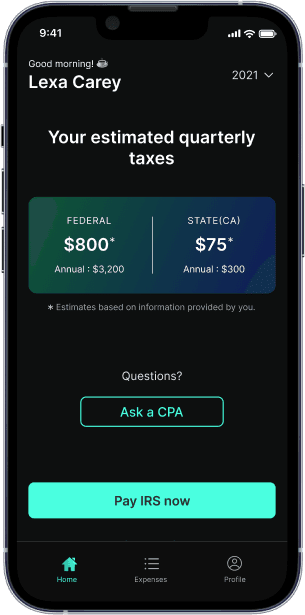
Quarterly tax deadline is Jan 15. See how much you owe penalties
1099 Tax Calculator

Are you self-employed?
This includes freelancers and business owners.
Tax Strategies for Planning for 1099 Earners
Although you are your own boss as a 1099 earner, you are also in charge of handling your own taxes. You don’t have taxes deducted from your income like W-2 employees do, so it’s important to prepare ahead of time to prevent a large tax bill at the end of the year. The main tactics for reducing your tax liability will be discussed in this article, including utilizing retirement andhealth savings accounts, putting money aside for taxes, managing your tax bracket, and speaking with a tax expert. Additionally, understanding how your adjusted gross income influences your tax liability and eligibility for further deductions or credits is crucial.
Table of contents
Understanding Taxable Income
Taxable income is the amount of income that is subject to income tax. It is the total income earned by an individual or business, minus any deductions and exemptions allowed by the tax laws. Understanding taxable income is crucial for high-income earners, as it directly affects their tax liability.
What is Taxable Income for 1099 Earners?
How to Calculate Taxable Income
Importance of Accurate Income Reporting
How Careful Tax Planning Can Help Control Tax Bracket Creep
When your income rises, you are forced into a larger tax band, a phenomenon known as tax bracket creep. Understanding federal income tax brackets can help in managing tax bracket creep and optimizing tax efficiency. It’s critical for 1099 earners to properly plan their income in order to manage this creep. Here are some pointers:
- Vary Your Income: To maintain a lower total income, try to vary your sources of revenue. You may be able to maintain your lower tax bracket by doing this.
- Take Advantage of Deductions: Maintain thorough records of your business costs to optimize your deductions. Your taxable income may drop dramatically as a result.
- Think About a Retirement Plan: You can lower your taxable income and save for the future by making contributions to a retirement plan, such as a solo 401(k) or SEP IRA.
Reducing Your Tax Bracket Using Retirement Savings and Health Savings Accounts (HSAs)
Accounts for health and retirement savings are effective ways to lower your taxable income.
- Retirement Plans: Tax deductions are available for contributions to retirement plans such as solo 401(k)s and SEP IRAs. This implies that the amount you contribute can be deducted from your taxable income.
- Health Savings Accounts (HSAs): You can make contributions to an HSA if you have a high-deductible health plan. Withdrawals for medical costs are tax-free, and contributions are tax deductible. Withdrawals from HSAs for qualified medical expenses are tax-free, which serves as a significant benefit for individuals looking to manage their healthcare costs efficiently.
Putting Money Aside for Taxable Income All Year Long
You must pay self-employment taxes, which include Social Security and Medicare taxes, as a 1099 earner. To prevent a large lump sum payment at the end of the year, it is imperative to set aside funds throughout the year to pay tax obligations.
- Quarterly Anticipated Tax Payments: If you anticipate owing more than $1,000 in taxes for the year, you must submit anticipated quarterly tax payments, per IRS regulations. The following year’s April 15, June 15, September 15, and January 15 are the due dates for payments. Learn more abouthow FlyFin can help with your quarterly taxes.
- Different Bank Account: Create a distinct bank account for your tax savings. By doing this, you can prevent unintentionally spending your tax money and keep it apart from your business income.
Optimizing Self-Employed Individuals' Deductions for High Income Earners
Reducing your taxable income requires maximizing your deductions. The following are typical deductions for independent contractors:
- Business Expenses: Write off business expenses including supplies for the office, travel expenses, and expenses for thehome office. Certain investments, like U.S. Treasury securities, can be exempt from local taxes, providing a significant benefit for high-income earners. To make sure you can properly claim these expenses, keep thorough records of them.
- Health Insurance Premiums: You can claim the premiums as a business expenditure if you pay for your own health insurance.
- Retirement Plan Contributions: Tax deductions are available for contributions to retirement plans such as solo 401(k)s and SEP IRAs.
- Home Office Deduction: You can claim a home office deduction for a portion of your rent or mortgage interest and utilities if you use a specific location for your business.
Making Quarterly Payment Plans to Prevent Fines
Penalties and interest may be incurred if quarterly anticipated tax payments are not made. Here’s how to prepare in advance:
- Estimate Your Taxes: To determine how much you will owe in taxes, use anonline self-employment tax calculator. This will assist you in figuring out how much you should save every quarter. Additionally, consider state and local taxes when estimating your quarterly payments to avoid unexpected liabilities.
- Installed a Mechanism: Establish a mechanism to allocate funds for taxes every month. Simply depositing a portion of every payment into your tax savings account could do this.
- Make Payments Online: You can pay your estimated taxes online through the IRS. Set up payments straight from your bank account by creating a taxpayer account.
Managing Capital Gains
Capital gains are profits made from the sale of assets, such as stocks, real estate, and businesses. Managing capital gains is essential for high-income earners, as it can significantly impact their tax liability.
Understanding Capital Gains Tax Rates
Retirement Savings to Lower Taxable Income
In addition to securing your future, retirement savings lower your current taxable income. Strategies for high income earners include specific tax reduction tactics such as changing the character of income and timing gains or losses. It is crucial to consult with financial advisors to navigate these complex tax laws effectively. For independent contractors, the following retirement choices are available:
- SEP IRA: You can contribute up to 20% of your net self-employment income to a SEP IRA, with a limit of $57,000 in 2024.
- Solo 401(k): You can contribute up to 20% of your net self-employment income to a solo 401(k), with a maximum of $57,000 in 2024 and an extra $6,500 if you are 50 years of age or older.
- Cash Balance Pension Plan: This kind of defined benefit plan lets you make pre-tax contributions and postpone paying taxes on a larger portion of your earnings.
Seeking Advice from a Tax Expert on How to Reduce Taxes as a 1099 Employee
Even if you can handle your taxes alone, speaking with a tax expert will guarantee you’re using all of your deductions and offer tailored advise. Implementing effective tax saving strategies is crucial, and consulting with experts can help you achieve this. The following are some advantages of seeking advice from a tax expert:
- Personalized Advice: A tax expert can examine your particular circumstances and offer customized guidance on reducing your taxes.
- Deduction Maximization: To make sure you’re not losing out on any possible savings, they may assist you in locating and maximizing all allowabledeductions for freelancers.
- Compliance: They can guarantee that you’re fulfilling all tax obligations and averting any possible fines.
Final Thoughts
As a 1099 earner, tax planning calls for meticulous planning and attention to detail. You may drastically lower your taxable income and save money by controlling your tax bracket, utilizing retirement and health savings accounts, putting money aside for taxes, and speaking with a tax expert. To prevent penalties, keep thorough documents, plan ahead, and maintain organization. You can master the tax aspects of being a 1099 earner and preserve more of your hard-earned money if you have the appropriate procedures in place.
What’s FlyFin?


Expert tax CPAs ensure 100%-accurate tax filing

A.I. finds every tax deduction, eliminating 95% of your work

On average users save $3,700