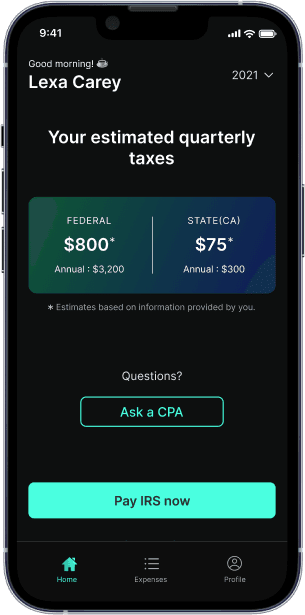
Quarterly tax deadline is Jan 15. See how much you owe penalties
1099 Tax Calculator

Are you self-employed?
This includes freelancers and business owners.
Does DoorDash Take Out Taxes? A Description of the Independent Contractor Model
Because DoorDash uses an independent contractor model, its drivers are regarded as independent company owners rather than workers. The way taxes are handled is significantly impacted by this classification. Independent contractors, such as DoorDash drivers, receive a 1099-NEC tax form that reveals their total earnings without any taxes withheld, in contrast to regular employees who receive a W-2 form that shows their earnings and taxes withheld.
Table of contents
Distinctions Between 1099 Contractors and W-2 Employees
The way taxes are handled is the main distinction between 1099 contractors and W-2 employees. Understanding tax filings is crucial for 1099 contractors, as they need to navigate their tax responsibilities without employer withholding. W-2 workers find the tax process easier because their employer withholds their taxes. 1099 contractors, on the other hand, are in charge of handling their own taxes. This involves figuring outself-employment taxesin addition to federal and state income taxes. Because of this, 1099 contractors have to budget throughout the year to pay these taxes.
Reasons DoorDash Doesn't Deduct Taxes from Dashers' Income
Due to Dashers’ status as independent contractors, DoorDash does not deduct taxes from their pay. Understanding doordash driver taxes is crucial for managing tax responsibilities effectively. This implies that the Dasher bears full responsibility for paying taxes. Dashers have the chance to optimize theirtax deductions, which can drastically lower their total tax obligation, even if this can be difficult.
Gig Workers' Self-Employment Tax Requirements
For gig workers like DoorDash drivers,self-employment taxesare a significant part of their tax responsibilities. Social Security and Medicare contributions, which are normally divided between an employer and an employee in conventional employment contexts, are covered by these taxes. The employer and employee shares of these taxes, which equal 15.3% of their net self-employment income, must be paid by gig workers since they are independent contractors.
Income Types DoorDash Reports
DoorDash uses the 1099-NEC form to report many forms of income to its drivers. It is crucial for drivers to collect and fill out relevant tax forms to ensure proper tax filing. Base salary, tips, wage increases, and milestones are all included in this. The driver’s taxable income, which must be reported on their personal tax return, is determined by adding up all of the amounts on the 1099-NEC form.
Comprehending Self-Employment Tax Obligations
In terms of handling their taxes, DoorDash drivers have a number of obligations as independent contractors. These consist of:
- Deducting any business deductions from the total earnings reported on the 1099-NEC form is the first step in calculating taxable income. Mileage, phone use, and other business-related costs are examples of common deductions. Learn more abouthow to track mileage for taxes. A Stripe Express account is essential for managing tax documents like the 1099-NEC form, allowing users to correct any inaccuracies and access their 1099 tax information from DoorDash.
- Determining Tax Filing Status: The amount of taxes due is influenced by the filing status (head of household, widow(er) with dependent children, married filing jointly, married filing separately, and single). For instance, married couples filing jointly usually pay a different tax rate than single filers.
- Paying Quarterly Estimated Taxes: Self-employed people are required to pay estimated taxes on a quarterly basis in order to avoid fines. This includes calculating their yearly tax obligation and paying four quarterly installments over the course of the year.
- Claiming Business Deductions: You can drastically lower your taxable income by maximizing your business deductions. Mileage, equipment expenses, and other costs directly associated with the Dasher business are examples of common deductions.
Business Expenses and Tax Savings
As a DoorDash driver, you’re eligible to deduct business expenses on your tax return, which can help reduce your tax bill. Common business expenses for DoorDash drivers include:
- Mileage: You can deduct the miles driven for business purposes using the standard mileage rate (58 cents per mile in 2023) or the actual expense method. This includes miles driven to pick up deliveries, between deliveries, and returning home at the end of the day.
- Phone and Service: Deduct the portion of your phone and service expenses used for business purposes. This includes the cost of your phone plan and any accessories like car chargers and phone holders.
- Health Insurance: If you’re self-employed and meet certain requirements, you can deduct your health insurance premiums.
- Hot Bags, Blankets, and Courier Backpacks: These items are considered “ordinary and necessary” business expenses and are deductible.
- Tolls and Parking: Deduct toll fees and parking expenses incurred while working.
- Inspections and Roadside Assistance: Fees for vehicle inspections and roadside assistance programs are also deductible.
By keeping track of these business expenses, you can significantly lower your taxable income and, consequently, your overall tax bill.
Managing Your Tax Bill
As a DoorDash driver, you’re responsible for paying your own taxes, including self-employment taxes. To manage your tax bill effectively, consider the following:
- Keep Accurate Records: Track your income and expenses meticulously to ensure you’re taking advantage of all eligible deductions. This includes keeping receipts and maintaining a log of your business miles.
- Consult a Tax Professional: A tax professional can help you navigate the complexities of tax laws and ensure you’re in compliance. They can also provide personalized tax advice to help you minimize your tax liability.
- Make Quarterly Estimated Tax Payments: As a self-employed individual, you’re required to make quarterly estimated tax payments to avoid penalties. Use Form 1040-ES to calculate and make these payments.
- Take Advantage of Tax Deductions: Don’t miss out on eligible deductions, such as business expenses and home office deductions. These can significantly reduce your taxable income and lower your tax bill.
By staying organized and proactive, you can manage your tax obligations more effectively and avoid any unpleasant surprises come tax season.
Quarterly Estimated Tax Payments
As a self-employed individual, you’re required to make quarterly estimated tax payments to the IRS. The due dates for quarterly taxes are:
- April 15thfor the first quarter (January 1 - March 31)
- June 15thfor the second quarter (April 1 - May 31)
- September 15thfor the third quarter (June 1 - August 31)
- January 15thof the following year for the fourth quarter (September 1 - December 31)
You can use Form 1040-ES to make quarterly estimated tax payments. By making these payments on time, you can avoid penalties and ensure that you’re staying on top of your tax obligations throughout the year.
Record Keeping and Organization
As a DoorDash driver, it’s essential to keep accurate records of your income and expenses. Consider the following tips to stay organized:
- Keep a Log of Your Miles Driven for Business Purposes: Use a mileage tracking app or a simple logbook to record the miles you drive for deliveries. This will help you maximize your mileage deduction.
- Keep Receipts for Business Expenses: Save receipts for expenses such as phone and service costs, health insurance premiums, and hot bags. These receipts will be necessary when claiming deductions.
- Track Your Income from DoorDash: Keep detailed records of your earnings, including tips and other income. This will ensure you report all your income accurately on your tax return.
- Use a Spreadsheet or Accounting Software: Consider using a spreadsheet or accounting software to keep track of your income and expenses. This can simplify the process of filing taxes and help you stay organized throughout the year.
By maintaining accurate records, you can ensure that you’re taking full advantage of all eligible deductions and staying compliant with tax laws.
Using a Dasher to Optimize Tax Deductions
The ability to write off a variety of business expenses is one advantage of working for yourself, Dasher. By lowering taxable income, these deductions can help cut the total amount of taxes owed. When it comes to deducting car-related costs, you can choose between the standard mileage deduction and the actual expenses method. These are a few typical deductions:
- Distance Deduction: Dashers are eligible to deduct 57.5 cents per mile for distance driven for business purposes. This covers the distance traveled to the initial delivery pickup, in between deliveries, and at the conclusion of the day to return home. Find out more abouthow to track mileage for taxes.
- Deduction for Phone and Accessories: You can claim a deduction for the expenses incurred when using a phone for work. As long as they are utilized for work-related activities, this also applies to phone accessories like car chargers and holders.
- Equipment Costs: You can deduct any equipment that you buy especially to utilize in your Dasher business. This comprises insulated bags, hot bags, and other meal delivery supplies.
Tips and Other Income
As a DoorDash driver, you may receive tips and other income in addition to your base pay. Here’s what you need to know:
- Tips Are Taxable Income: Tips are considered taxable income and must be reported on your tax return. Keep track of all the tips you receive to ensure accurate reporting.
- Other Income: Other forms of income, such as delivery fees and promotions, are also considered taxable income. Make sure to include these amounts when calculating your total earnings.
- Accurate Reporting: Keep detailed records of all your income sources to ensure you’re reporting everything accurately on your tax return. This will help you avoid any issues with the IRS and ensure you’re paying the correct amount of taxes.
By staying diligent about tracking your tips and other income, you can ensure that you’re meeting your tax obligations and avoiding any potential penalties.
How to Pay Taxes with DoorDash
There are multiple steps involved in paying DoorDash taxes:
- Getting the 1099-NEC Form: DoorDash will provide you with a [1099-NEC form](tax/delivery-driver/doordash-taxes-1099) that details your whole profits if you make more than $600 in a year.
- Determining Taxable Income: To find your taxable income, reduce any business deductions from the total earnings listed on the 1099-NEC form.
- Paying Quarterly Estimated Taxes: You have to pay estimated taxes on a quarterly basis to avoid fines. These payments can be made using Form 1040-ES.
- Filing Your Tax Return: Form 1040 must be used to file your tax return. Schedule SE will be used to determine your self-employment tax, and Schedule C will be used to disclose your company revenue and costs.
Do You Need Assistance with DoorDash Tax Filing?
It can be difficult to file taxes as a Dasher, particularly if you are new to working for yourself. Here are some pointers:
- Speak with a Tax Expert: Consulting a tax expert, such a certified public accountant, can assist guarantee that you receive all of the deductions to which you are legally entitled and steer clear of any possible fines or audits.
- Use Tax Calculators: To estimate your tax burden, you can use a variety of tax calculators. You can also use these calculators to determine how much you should save for taxes each year.
- Maintain Accurate Records: Correct tax filing depends on maintaining accurate records of your company's revenue and expenses. This involves keeping tabs on spending, mileage, and other business-related tasks.
What Takes Place If DoorDash Taxes Are Not Paid?
There are serious repercussions for not paying DoorDash taxes, including:
- Penalties and Interest: When taxes are not paid, the IRS levies penalties and interest. These fees have the potential to mount up rapidly and dramatically raise your tax liability.
- IRS Audit: If taxes are not paid, an IRS audit may be conducted, which may be a difficult and drawn-out procedure. The IRS may examine your financial records as part of an audit to make sure tax laws are being followed.
- Legal Action: In extreme circumstances, persistent tax nonpayment may result in legal action, which could include fines or criminal charges.
Final Thoughts
Managing DoorDash taxes necessitates a deep comprehension of tax requirements and self-employment responsibilities. You can successfully negotiate the intricacies of DoorDash taxes by following the procedures described in this article. Don't forget to pay quarterly anticipated taxes, optimize your tax deductions, and, if necessary, get tax advice from an expert. You can reduce your tax obligation and guarantee adherence to IRS rules by taking the appropriate course of action.
Self-employed Dashers can lower their overall tax burden by using this guidance to better manage their tax obligations and optimize their deductions. Additionally, if you're also delivering for other platforms like Grubhub, understandingGrubhub tax 1099can be beneficial.
What’s FlyFin?


Expert tax CPAs ensure 100%-accurate tax filing

A.I. finds every tax deduction, eliminating 95% of your work

On average users save $3,700