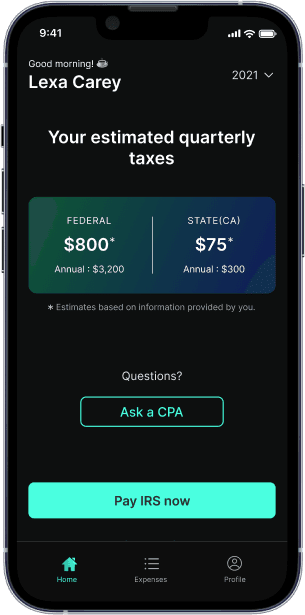
Quarterly tax deadline is Jan 15. See how much you owe penalties
1099 Tax Calculator

Are you self-employed?
This includes freelancers and business owners.
How to Get the Maximum Goodwill Deduction Out of Your Donations Tax Deductions
Managing your money and taxes as a self-employed person can be a difficult undertaking. Utilizing goodwill tax deductions by donating to Goodwill is one way to lower your taxable income and support the local community. However, making the most of these contributions calls for some careful preparation and knowledge of tax regulations. In order to maximize your permitted deductions, we will walk you through the steps of timing your gifts, valuing your belongings, and combining cash and non-monetary contributions in this post. For more tips on optimizing deductions, check out thetop 15 tax deductions and benefits for the self-employed.
Table of contents
Understanding Charitable Contribution Deductions
Charitable contribution deductions are a valuable tool for reducing your taxable income while supporting causes you care about. The Internal Revenue Service (IRS) allows taxpayers to deduct the fair market value of donations made to qualified organizations, such as Goodwill. But what exactly does this mean, and how can you ensure you’re maximizing your deductions?
To qualify for a charitable contribution deduction, your donation must be made to a qualified organization. Goodwill is one such organization, recognized by the IRS for its charitable work. When you donate, you can deduct the fair market value of the items. The fair market value is essentially the price that a willing buyer would pay for the item in its current condition. This value can be determined using guidelines provided by the IRS in Publication 526, which offers detailed instructions on how to assess the value of various items.
It’s important to note that to claim these deductions, you must itemize your deductions on your tax return. This means listing out all your deductible expenses, including charitable contributions, rather than taking the standard deduction. While this process can be more time-consuming, it can lead to significant tax savings if your total itemized deductions exceed the standard deduction.
For accurate valuation and reporting of your donations, consider consulting with a local tax advisor. They can provide personalized advice and ensure that you’re complying with IRS regulations. By understanding and properly utilizing charitable contribution deductions, you can make the most of your Goodwill donations and enjoy the financial benefits of your generosity.
When to Make Donations to Get the Most Out of Annual Deductions
Your yearly tax deductions may be greatly impacted by the timing of your donations. Here are some important things to think about: Year-End Contributions: It may be advantageous to make your contributions at the end of this year if you anticipate being in a higher tax bracket the next year. In this manner, you can lower your taxable income by claiming the deductions for the current year. Mid-Year Contributions: Think about donating in the middle of the year if your income varies or if you expect to be in a lower tax rate the following year. By spreading out the deductions, you may be able to more equitably lower your tax liability. Timing your donations can help you maximize your tax deductible contributions.
Contributing Valuable Property to Receive Extra Tax Advantages
Additional tax advantages may arise from donating appreciated assets like stocks or real estate. This is how it operates:
For non-cash contributions exceeding $5,000, a qualified appraisal is required to ensure compliance with IRS regulations.
Valued Resources
Methods for Increasing Standard Deduction by Combining Donations
Even though the standard deduction has grown recently, if you have made sizable charitable contributions, choosing to itemize deductions can still be advantageous.
The following are some methods for pooling donations:
List All Deductions:You may be able to surpass the standard deduction by combining your charitable contributions with itemizable expenses such as mortgage interest, property taxes, and other costs. For instance, itemizing your deductions may be helpful if you have $10,000 in charitable contributions and $15,000 in mortgage payments. It is also possible to itemize non-cash contributions, such as furniture, clothing, and household goods. To make figuring out your deductions easier, Goodwill offers a helpful donation value guide that calculates the fair market worth of different things.
Advantages of Monitoring Charitable Contributions All Year Long
To maximize your tax benefits, it is essential to keep track of your donations throughout the year. This is the reason: Keeping track of noncash charitable contributions is essential for accurate reporting and maximizing deductions.
Keeping Records
Form 8283
Assessing Goods for the Maximum Permitted Fair Market Value Deduction
To maximize your deductions, you must ascertain the donations fair market value (FMV) of the products you contributed.
Here’s how to accomplish it:
The Value Guide of Goodwill:Goodwill offers average values for well-maintained items in their helpful donation value guide. Calculating your deductions will be simpler if you use this guidance to estimate the FMV of different things. The value of the fair market is: The amount that a willing buyer would pay on the open market for the item is known as the FMV. For instance, the FMV of a nicely used book that you contribute could be $5. The FMV of a piece of furniture that you donate can be $100.
Combining Non-Cash and Cash Contributions to Qualified Organizations to Get the Most Tax Savings
You can maximize your tax savings by combining cash and non-monetary contributions. Combining cash and non-cash donations can help you maximize your deductible charitable contributions.
Here’s how:
Donations in Cash
Non-Cash Donations
Final Thoughts
Making the most of your tax deductions from Goodwill contributions necessitates careful planning and knowledge of tax regulations. You can save a lot of money on taxes by combining cash and non-monetary donations, timing your donations, and accurately valuing your goods. Keep thorough records of your contributions, and if you have any questions about any part of the procedure, get advice from a tax expert. If you need to file taxes in two states, you can find guidance on how to do sohere.
Extra Advice
Speak with a Tax Expert:Even while this guide offers useful information, it's always a good idea to speak with a tax expert to be sure you're claiming all of your deductions. Maintain Organization: It's important to keep track of your donations all year long. To keep organized and make sure you have all the paperwork you need, use a digital tax receipt organizer. You can optimize your tax deductions with Goodwill donations and realize the full potential of your charitable gift by adhering to these guidelines.
What’s FlyFin?


Expert tax CPAs ensure 100%-accurate tax filing

A.I. finds every tax deduction, eliminating 95% of your work

On average users save $3,700