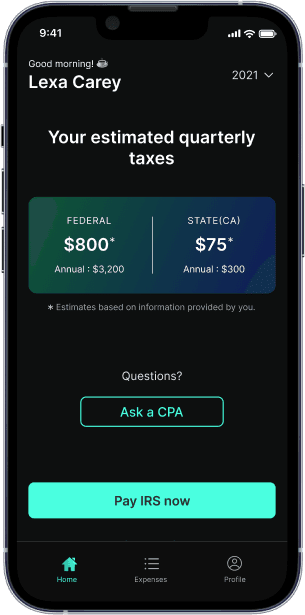
1099 Tax Calculator

Are you self-employed?
This includes freelancers and business owners.
An Explanation of PA State Income Tax
One of the 13 states having a flat income tax rate is Pennsylvania, where all citizens pay the same amount regardless of their income. The state income tax rate is 3.07 percent as of2024. Compensation, interest, dividends, capital gains, net gains from businesses or farms, and other kinds of income are all subject to this flat rate.
Table of contents
Overview of Pennsylvania Taxes
Pennsylvania has a multifaceted tax system that includes various types of taxes imposed on both residents and non-residents. The state levies an income tax, which is a flat rate of 3.07 percent on all taxable income. Individuals can also take advantage of various tax deductions to lower their taxable income. Additionally, Pennsylvania residents may encounter property tax, which is assessed based on the value of real estate, and inheritance tax, which applies to the transfer of assets from deceased individuals to their heirs. Understanding these different types of taxes and their calculations is crucial for individuals and businesses to ensure compliance with state tax laws and regulations.
Pennsylvania's Taxable Income Sources
Taxable income in Pennsylvania comes from a variety of sources, including:
- Compensation: This includes gratuities and bonuses in addition to employment earnings and salaries.
- Interest: The taxable interest received from investments such as certificates of deposit (CDs) and savings accounts.
- Dividends: Stock dividends.
- Net Profits from Businesses or Farms: Earnings from running a farm or business.
- Net Gains or Income from Property Dispositions: Gains from the sale of real estate or other properties.
- Rents, Royalties, Patents and Copyrights: Revenue from intellectual property royalties, revenue from patents and copyrights, and revenue from renting out real estate.
- Income Derived Through Estates or Trusts: Income received by estates and trusts.
- Lottery and Gambling Winnings: Winnings from the Pennsylvania Lottery and gambling, excluding non-cash awards.
- Tax-Exempt Items or Income: Certain items or income types may be tax exempt, such as specific categories of sales tax-exempt items or certain types of income.
Who Must File Pennsylvania Taxes
Every resident, part-year resident, or non-resident individual who earns income generating $1 or more in tax must file a Pennsylvania Income Tax Return (PA-40). Understanding the tax filing requirements is essential for ensuring compliance with state tax laws. This requirement extends to individuals who are obligated to file a federal income tax return, as well as those who have income from sources within Pennsylvania. Whether you are a full-time resident or someone who only worked in the state for a portion of the year, filing a Pennsylvania income tax return is essential to meet your tax obligations.
Resident and Nonresident Defined
Pennsylvania Income Tax Exemptions
Although Pennsylvania’s tax code is rather simple, you can lower your taxable income by taking advantage of the following exemptions:
- Retirement Income: State income tax does not apply to pensions, 401(k), 403(b) plans, or individual retirement accounts.
- Social Security Benefits: Pennsylvania does not impose taxes on Social Security benefits.
- Charitable Donations: You can deduct donations to eligible charities from your taxable income.
- Surviving Spouse: Exemptions from inheritance tax may apply to a surviving spouse, allowing them to file joint or separate tax returns after the death of a spouse.
Tax Rates and Calculation
Pennsylvania imposes a flat individual income tax rate of 3.07 percent on all taxable income, regardless of the individual’s income level. Your tax liability is the total amount of tax you owe to the state. In addition to the state income tax, local taxes, including school district taxes, may also be levied on residents, adding to the overall tax burden. Calculating the correct amount of tax can be complex, especially when considering local taxes and potential deductions. Consulting with a tax professional can help ensure accurate calculation and compliance with both state and local tax laws.
Typical Income Modifications Made Using a Tax Calculator
You must take into account a number of adjustments when calculating your Pennsylvania state income tax using atax calculator:
- Standard Deduction: You can lower your taxable income in Pennsylvania by taking advantage of the standard deduction.
- Itemized Deductions: You can lower your taxable income by itemizing deductions if you have large costs, such as mortgage interest, medical bills, or charitable contributions.
- Tax Benefits: For low-income people and families, Pennsylvania provides a number of tax benefits, including the Earned Income Tax Credit (EITC).
Tax credits can also be applied to reduce the amount of tax owed, providing additional financial relief.
Filing and Payment Deadlines
The deadline for filing a Pennsylvania state tax return is April 15th of each year, aligning with the federal tax filing deadline. The tax return deadline is crucial to avoid penalties and interest. If needed, individuals can request a six-month extension to file their return, but it is important to note that any taxes owed must still be paid by the original April 15th deadline to avoid penalties and interest. The Pennsylvania Department of Revenue allows for state tax returns to be filed electronically or by mail, providing flexibility in how you submit your return. Staying aware of these deadlines and filing requirements is crucial to avoid any additional charges or complications.
Pennsylvania's Local Taxes on Earned Income
In Pennsylvania, certain municipalities levy local earned income taxes (EITs), despite the state income tax rate being flat. The higher local income tax rate in Philadelphia, for instance, is 3.75 percent for residents and 3.44 percent for nonresidents. It's critical to include these municipal taxes in your calculations because they may increase your overall tax burden.
Distinctions Between the Pennsylvania and Federal Tax Codes
Accurate tax planning requires an understanding of the distinctions between the federal and state tax codes. Understanding the tax code differences between Pennsylvania and federal tax laws is essential for accurate tax planning:
- The federal income tax rates are progressive, which means that higher income levels are subject to greater rates of taxation. Pennsylvania, on the other hand, has a flat rate of 3.07 percent.
- Deductions and Credits: Some credits and deductions are applicable at the state or federal level, while others may only be applicable at the federal level. For example, Pennsylvania does not offer the mortgage interest deduction at the state level, but it does at the federal level.
- Exemptions: As previously stated, Social Security benefits and retirement income are not subject to Pennsylvania state income tax, although they might be liable to federal taxation.
Pennsylvania Part-Year Residents' Tax Repercussions
Your tax consequences as a part-year resident of Pennsylvania will be determined by how long you have lived there and how much money you make there, under Pennsylvania tax laws. The tax implications for part-year residents depend on the duration of residency and the amount of income earned in Pennsylvania. Here are some important things to think about:
- Residency Status: If you reside for a portion of the tax year, you are regarded as a part-year resident. You may have a job that requires you to work in Pennsylvania for only a portion of the year, or you may have moved to or from the state.
- Proportionate Taxation: The amount of your income that is taxed will depend on how long you lived in Pennsylvania. For instance, you would pay 50% of your salary for the six months of the year that you were a resident.
- Reporting Requirements: Even if you are not a full-year resident, you must submit a Pennsylvania state income tax return if you earned income in the state. If you are not a resident yet earned income in Pennsylvania, you might also have to file a non-resident return.
Useful Advice for Independent Contractors
As a self-employed person, navigating state taxes can be difficult, but the following helpful advice will help you:
- Maintain Accurate Records: Keep thorough records of all your earnings and outlays. Accurately calculating your taxable income and claiming deductions will be much easier with this.
- Speak with a Tax Professional: If you have any questions concerning Pennsylvania state income tax, you should think about speaking with a tax expert who focuses on state taxes.
- Utilize Exemptions and Credits: Make sure you're utilizing all of the exemptions and credits that are available to you, including the standard deduction and low-income tax credits.
- Plan Ahead: For independent contractors, tax planning is essential. To lower your taxable income, think about tactics like making charitable contributions or investing in tax-advantaged accounts.
You can better manage Pennsylvania's tax system by being aware of its exemptions, taxable income sources, local earned income taxes, and flat income tax rate. Don't forget to account for the distinctions between state and federal tax laws and the consequences for citizens who only live there for a portion of the year. You can reduce your state income tax liability and keep more of your hard-earned money by keeping proper records, seeking professional assistance when necessary, and engaging in strategic planning. Additionally, be aware of thekey IRS quarterly payment dates for 2024to stay on top of your tax obligations.
Deductions and Credits
Pennsylvania offers various deductions and credits to help reduce the amount of income tax owed. Some of the most common deductions and credits include:
- Medical Savings Account Contributions: Contributions to a Medical Savings Account (MSA) are deductible from your taxable income, providing a way to save on taxes while planning for future medical expenses.
- Local Taxes: You can deduct local taxes, such as property taxes and local income taxes, from your taxable income. This can help lower your overall tax burden.
- Local Sales Tax Rate: While Pennsylvania has a state sales tax rate of 6%, local sales tax rates can vary. Some counties and cities have higher or lower rates, which can affect your total tax liability.
- Pennsylvania Residents: If you are a Pennsylvania resident, you may be eligible for a credit for taxes paid to other states, helping to avoid double taxation on the same income.
- State Sales Tax Rate: The state sales tax rate is 6%, but be aware that some localities may have additional sales taxes.
- Taxes Owed: If you owe taxes to the state of Pennsylvania, you may be able to deduct the amount owed from your taxable income, reducing your overall tax liability.
- Retirement Income: While retirement income such as pensions and 401(k) distributions is generally taxable, certain types of retirement income may be tax-exempt, such as Social Security benefits.
- Individual Income Tax Return: You can claim these deductions and credits on your individual income tax return (PA-40), which can significantly reduce your taxable income.
- Tax Exempt: Some types of income, such as Social Security benefits and certain types of retirement income, are exempt from taxation in Pennsylvania.
- Inheritance Tax: Pennsylvania imposes an inheritance tax on the transfer of property from a deceased person to their heirs, but certain exemptions may apply, such as for a surviving spouse.
- Property Tax: Property tax is a local tax based on the assessed value of your home, and it can be deducted from your taxable income.
- Tax Rate: Pennsylvania has a flat income tax rate of 3.07%, which applies to all taxable income.
- Average Combined State: The average combined state and local sales tax rate in Pennsylvania is 6.34%, which can vary depending on your locality.
- Capital Gains: Capital gains, such as those from the sale of stocks or real estate, are taxable in Pennsylvania.
- Surviving Spouse: A surviving spouse may be eligible for a credit for taxes paid on their deceased spouse’s income, providing some financial relief during a difficult time.
- Individual Income Tax: Pennsylvania’s individual income tax is a flat rate of 3.07%, applied to all taxable income.
- State Tax: Pennsylvania imposes a state tax on both individual and business taxable income, which includes various types of income such as wages, interest, and dividends.
- State Taxes: In addition to income tax, Pennsylvania residents may also be subject to other state taxes, including sales tax and property tax.
Record Retention and Penalties
It is important to keep accurate records of your income, deductions, and credits to ensure compliance with Pennsylvania tax laws. Failure to keep accurate records or to file your tax return on time can result in penalties and fines.
- Record Retention: You should keep records of your income, deductions, and credits for at least three years in case of an audit. This includes receipts, bank statements, and any other documentation that supports your tax return.
- Penalties: If you fail to file your tax return on time or if you owe taxes and do not pay them, you may be subject to penalties and fines. These penalties can add up quickly, increasing your overall tax liability.
- Interest: If you owe taxes and do not pay them by the due date, you may be subject to interest on the amount owed. This interest accrues daily, so it’s important to pay any taxes owed as soon as possible to minimize additional costs.
- Audit: If you are audited, you will need to provide records to support your income, deductions, and credits. Keeping thorough and organized records can make the audit process smoother and help you avoid additional penalties.
Additional Resources
If you need additional help with your Pennsylvania taxes, there are several resources available to you:
- Pennsylvania Department of Revenue: The Pennsylvania Department of Revenue is responsible for administering the state’s tax laws. You can contact them for help with your tax questions or to file your tax return. They offer a variety of resources, including online tools and customer service support.
- Tax Professionals: Hiring a tax professional can provide valuable guidance on deductions and credits and help ensure that you are in compliance with Pennsylvania tax laws. They can also assist with more complex tax situations and provide personalized advice.
- Online Resources: There are several online resources available to help you with your Pennsylvania taxes, including tax preparation software and online tax guides. These tools can simplify the tax filing process and help you identify potential deductions and credits.
- Local Government: Your local government may also have resources available to help you with your taxes, such as tax preparation assistance or information on local tax laws. Check with your local tax office or community centers for available services.
By utilizing these resources, you can better navigate the complexities of Pennsylvania taxes and ensure that you are meeting all your tax obligations.
Final Thoughts
The 3.07 percent flat income tax rate in Pennsylvania offers a simple method of state taxes. Implementing effective tax strategies can help reduce your overall tax liability. Self-employed people can efficiently handle their state income tax responsibilities by being aware of the many sources of taxable income, possible exemptions, and local earned income taxes. To reduce your tax liability, don’t forget to plan ahead, keep proper documents, and get advice from a tax expert when needed. You’ll be better prepared to manage the intricacies of state taxation and retain a larger portion of your earnings if you follow these suggestions and have a firm understanding of Pennsylvania state income tax. Furthermore, consider exploringdeductions for self-employed individualsto maximize your tax savings.
What’s FlyFin?


Expert tax CPAs ensure 100%-accurate tax filing

A.I. finds every tax deduction, eliminating 95% of your work

On average users save $3,700