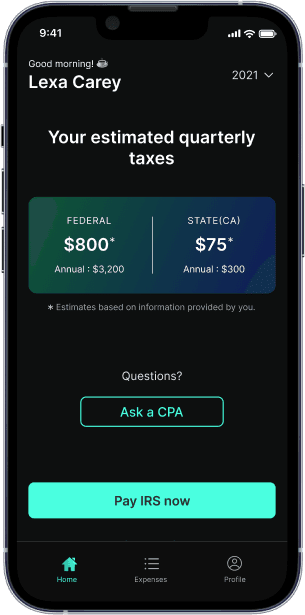
1099 Tax Calculator

Are you self-employed?
This includes freelancers and business owners.
PA Tax Deduction Calculator: Deductions & Credits in Pennsylvania
Knowing the Pennsylvania credits and deductions that are available to you is essential for tax management. These can drastically minimize your taxable income and your tax liability if you work for yourself. We’ll examine the several credits and deductions that can lower your Pennsylvania state taxes in this tutorial. Additionally, using an income tax calculator can be a useful tool for estimating Pennsylvania state taxes.
Table of contents
Understanding Pennsylvania Income Tax
Overview of State Income Tax
Pennsylvania has a straightforward approach to state income tax with a flat income tax rate of 3.07%. This rate applies uniformly to all taxable income earned by both residents and non-residents. The state income tax encompasses various types of income, including compensation, interest, dividends, net profits from businesses, and capital gains. Unlike some other states, Pennsylvania does not offer a standard deduction or personal exemption. However, taxpayers can still reduce their tax liability through specific deductions, credits, and exclusions. Understanding these options is crucial for minimizing your taxable income and effectively managing your income tax obligations.
Key Tax Rates and Brackets
Local Income Taxes in Pennsylvania
How Local Taxes Affect Your Overall Tax Liability
In addition to the state income tax, many municipalities in Pennsylvania impose local income taxes. These local taxes can range from 1% to 3.9% and are typically withheld from an employee’s paycheck. The revenue generated from local income taxes is used to fund essential local government services and infrastructure projects. The impact of local income taxes on your overall tax liability can be significant, especially in areas with higher local tax rates. For example, Philadelphia has a local income tax rate of 3.9%, which can substantially increase the overall tax liability for both residents and non-residents who work in the city. Understanding the local income tax rates in your area is essential for accurate tax planning and management.
Child Care and Education Tax Credits
Pennsylvania provides a number of tax credits to help pay for childcare and education. The purpose of these credits is to give families and people who spend money on childcare and education financial assistance. Additionally, your filing status can significantly affect your tax liabilities, as different statuses, such as head of household, can influence tax brackets and potential savings. Selecting the correct filing status is crucial to avoid financial repercussions.
Education Tax Credits in Pennsylvania
Tax Credits for Child Care
Itemized Deductions and Charitable Contributions
In Pennsylvania, charitable contributions make up a sizable portion of itemized deductions. Medical savings account contributions and savings account program contributions are specific deductions that can affect overall taxable income. There are rules to follow when it comes to deducting donations to eligible charities from your taxable income. Learn more aboutcharitable contributions.
How to Report Donations to Charities
Pennsylvania Medical Expense Deductions and Health Savings Accounts
For many taxpayers, medical costs can be a sizable source of deductions. Medical costs that surpass a specific percentage of your adjusted gross income (AGI) are deductible in Pennsylvania. Medical savings account contributions are also considered deductible medical expenses. This level is 10% of your AGI for the 2024 tax year.
Which Costs Are Covered?
Pennsylvania Charitable Contribution Deductions
In Pennsylvania, charitable contributions are an essential component of itemized deductions. Your taxable income might be considerably decreased by making donations to approved charity organizations. Here are some important things to think about:
- Documentation: Maintain thorough records of all donations to charities, including bank statements and receipts.
- Value of Donations: The deduction amount will be based on the value of the donation. For instance, you can deduct the car's fair market value if you donate a $5,000 vehicle.
- Donation Types: Non-cash gifts need additional paperwork, while cash donations are simple. For example, you must ascertain the fair market worth of any apparel or household items you contribute.
How to Determine Exclusions from Retirement Income
The purpose of retirement income exclusions is to assist seniors in better tax management. Pennsylvania residents need to be aware of their tax obligations, including retirement income exclusions. Retirement income in Pennsylvania is often exempt from state income tax. You should be aware of a few restrictions and exceptions.
Retirement Income Types
Local Income Taxes Paid to Other States and Their Credits
You may qualify for a credit on your Pennsylvania state taxes if you have income from other states. The Pennsylvania income tax rate is a flat rate, which may differ from the tax rates in other states. This is how it operates:
Credit for Residents Who Pay Taxes to Another State
Pennsylvania Tax Credits for Education and Tuition
One important program in Pennsylvania is the Educational Improvement Tax Credit (EITC). For qualifying contributions, this program enables individuals and businesses to get a state tax credit equal to 90% of their Pennsylvania state tax burden. These donations can be provided to authorized Educational Improvement Organizations (EIOs) or to schools that offer tuition support to students from low-income families.
Final Thoughts
For independent contractors hoping to maximize their tax plan, it is essential to comprehend Pennsylvania’s potential credits and deductions. You can drastically cut your taxable income and overall tax obligation by taking advantage of these options. In order to support your credits and deductions during an audit, don’t forget to maintain thorough records of all contributions and expenses. To be sure you are utilizing all of the credits and deductions that are available to you, always get advice from a tax adviser. Understanding Pennsylvania taxes, including the state's personal income tax structure and applicable rates, is crucial for effective tax planning.
Extra Advice for Self-Employed People
- Maintain Detailed Records: Keep thorough records of all business expenditures, including bank statements, invoices, and receipts. During an audit, this will assist you in supporting your credits and deductions.
- Remain Current on Tax Law Amendments: Laws and rules pertaining to taxes are subject to change. Make sure you are utilizing the most recent tax benefits by reviewing your tax planning techniques on a regular basis.
- Speak with a Tax Professional: You can be sure you are optimizing your savings and navigating the intricacies of Pennsylvania state taxes with the assistance of a tax advisor. Pennsylvania's income tax system operates on a flat tax, meaning all taxpayers pay the same percentage of their income regardless of earnings. This can have significant implications for self-employed taxpayers, as the effective tax rate may be higher due to limited deductions available. You can successfully manage your taxes and attain financial stability by heeding these pointers and being aware of Pennsylvania’s credits and deductions. For more information on deductions for self-employed individuals, check outDeductions for Self-Employed.
If you’re filing taxes with both W-2 and 1099 forms, make sure to understand the requirements by visitingFile Taxes with W-2 and 1099. Additionally, familiarize yourself with the1099 Formfor reporting your income accurately.
What’s FlyFin?


Expert tax CPAs ensure 100%-accurate tax filing

A.I. finds every tax deduction, eliminating 95% of your work

On average users save $3,700