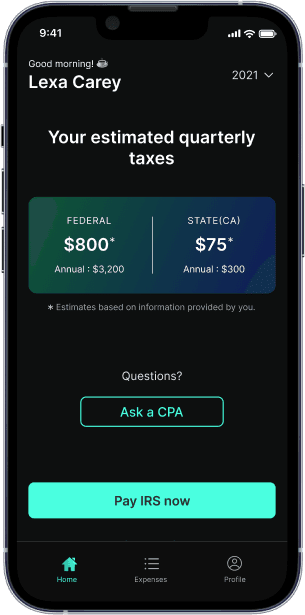
1099 Tax Calculator

Are you self-employed?
This includes freelancers and business owners.
Maryland Tax Refund Status: A Guide for Self-Employed Persons and Freelancers Registering in Maryland
Greetings from the realm of self-employment and freelancing. If you're among the numerous people who have followed this path, you're probably aware of the particular difficulties it presents. Navigating the complicated world of taxes is one of the most difficult challenges. Self-employed people in Maryland must comply with a number of onerous restrictions and regulations. But do not be alarmed. This article is intended to assist you in comprehending and addressing the tax responsibilities associated with working as a freelancer or self-employed person in Maryland.
Table of contents
Registering Your Business in Maryland
Starting your journey as a self-employed individual in Maryland begins with registering your business. The first step is to obtain a Federal Tax ID Number (EIN) from the IRS. This unique identifier is essential for tax purposes and can be easily acquired online through the IRS website or by submitting Form SS-4 via mail or fax.
Once you have your EIN, the next step is to register your business with the Maryland Department of Assessments and Taxation. This process involves providing your business name, address, type of business, and your EIN, along with other identifying information. You can complete this registration online through the Maryland Business Express website or by mailing Form 1.
After successfully registering your business, ensure you obtain any necessary licenses and permits required to operate in Maryland. Compliance with these regulations is crucial to avoid any legal issues and to ensure your business runs smoothly.
How Self-Employment Income and Tax Return Are Handled by the Calculator
Unlike traditional employment, self-employment does not impose the same withholding regulations on your income. This implies that you will have to calculate and pay your own taxes. You can use theMaryland self-employment tax calculatorto find out how much you owe. The tax is divided into two sections: 2.9% for Medicare, which is applied to your whole net income, and 12.4% for Social Security, which is applied to the first $137,700 of your net income.
Calculating State Income Tax and Self-Employment Tax
It can be a little challenging to estimate your self-employment tax, but it's necessary to prevent fines. Here is a detailed guide:
- Determine Your Net Earnings: Compute the total amount of money you make from freelancing. This sums up all of the money received less any company costs.
- Apply the Social Security and Medicare Rates: To find out how much you owe in Social Security and Medicare taxes, use theMaryland self-employment tax calculator.
- Add State Income Tax: You must additionally pay state income tax on your profits in Maryland. Your federal self-employment tax will be increased by this.
- Make Quarterly Payments: You will be required to make quarterly estimated tax payments rather than having taxes deducted from your paycheck. Form 1040-ES, the same form used for federal anticipated tax payments, is utilized for this.
Maryland Tax Deductions for Independent Contractors and Freelancers
You are eligible for a number ofdeductionsas an independent contractor or freelancer, which can drastically lower your taxable income. These are a few typical deductions:
- Business Expenses: Costs associated with operating your business, such as office supplies, equipment, travel expenses, and professional fees, are referred to as business expenses.
- Home Office Deduction: You may qualify for a home office deduction if you have a specific area in your house that you use for work. This can include utilities, insurance, and a percentage of your rent or mortgage interest.
- Retirement Contributions: You can deduct contributions from your taxable income if you make them to a single 401(k) or SEP-IRA.
- Health Insurance Costs: You may be eligible to deduct health insurance costs for your family and yourself if you work for yourself.
- Professional Fees: You may deduct fees you pay to accountants, attorneys, and other experts involved in your company.
Determining Self-Employed Individuals' Quarterly Tax Payments
Paying taxes on time each quarter is essential to avoiding fines. Here's how to figure them out:
- Estimate Your Annual Income: Calculate your expected yearly income based on your income from the prior year or your income projection for the current year.
- Determine Your Tax Liability: To find out how much you owe in federal and state taxes, use theMaryland self-employment tax calculator.
- Divide by Four: To calculate your quarterly tax obligation, divide your estimated yearly tax burden by four. The following dates are due: April 15th for Q1, June 15th for Q2, September 15th for Q3, and January 15th of the subsequent year for Q4. To make your quarterly payments, use Form 1040-ES.
State Tax Requirements for Independent Contractors
Maryland has particulartax requirementsfor independent contractors and self-employed people. Here are some important points:
- Form 502: You must submit Form 502 to the Maryland Department of Assessments and Taxation as a lone proprietor. Your personal income and deductions are combined with your business income and costs on this form.
- Personal Property Return: You are required to register and submit an annual personal property return to the Department of Assessments and Taxation if you own personal property such as furnishings, fixtures, tools, machinery, or equipment for your company.
- Business License: You may require a business license, depending on the type of business you run. This is typically necessary for companies that operate in particular Maryland locales or industries.
Maryland Residents' Business Expense Deductions
One of the most important ways to lower your taxable income is through deductions. Maryland citizens can claim the following typical business expenditure deductions:
- Office Supplies: Stationery, paper, pens, and other office supplies are included in this category.
- Equipment and Machinery: You may deduct any machinery or equipment you buy for your company.
- Travel Expenses: You can claim deductions for business-related travel expenses, including housing, food, and transportation charges.
- Professional Fees: You may deduct fees you pay to accountants, attorneys, and other experts involved in your company.
- Insurance Premiums: You may deduct business-related insurance premiums, such as equipment or liability insurance.
Managing Your Finances and Maximizing Your Refund Amount
To maximize your refund amount and ensure a smooth tax season, it’s vital to keep meticulous records of your income and expenses throughout the year. Utilizing tax preparation software or consulting with a tax professional can help you identify all eligible deductions and credits, potentially increasing your refund.
Consider setting up a separate bank account specifically for your tax refund. This can help you keep your refund funds distinct from your everyday spending money, making it easier to manage and allocate. If you anticipate a large refund, you might want to adjust your withholding to reduce the amount of taxes taken out of your paycheck, thereby increasing your take-home pay throughout the year.
When you receive your refund, think strategically about how to use it. Paying off debt, saving for retirement, or investing in a tax-advantaged savings account are all excellent options that can provide long-term financial benefits.
Additional Resources and Support
If you need assistance with your tax return or have questions about Maryland taxes, the Comptroller’s Office is a valuable resource. You can reach them at (410) 260-7980 or via email at taxhelp@marylandtaxes.gov. Additionally, the Maryland Taxes website offers a wealth of information on tax laws, forms, and deadlines.
For federal tax information, the IRS website (irs.gov) is an indispensable resource. If you find yourself unable to pay your tax bill in full, explore options such as payment plans or other relief measures that may be available to you.
Don’t hesitate to seek help from a tax professional if you’re struggling to manage your finances or navigate the tax process. Professional guidance can provide peace of mind and ensure you’re making the best financial decisions for your situation.
Final Thoughts
In Maryland, filing taxes as a self-employed person or freelancer might be challenging, but it is doable with the correct resources and information. You can drastically lower your tax bill by using the Maryland self-employment tax calculator, precisely estimating your self-employment tax, and utilizing the available deductions. In order to avoid penalties and guarantee compliance with state tax responsibilities, don't forget to make quarterly payments. You can concentrate on expanding your company while navigating the tax landscape with the help of this book.
Extra Advice
- Maintain Accurate Records: Maintaining thorough records is essential to monitoring your earnings and outlays. This will assist you in precisely determining your tax obligation and guarantee that you are utilizing all available deductions.
- Speak with a Professional: If you have any questions concerning any part of your tax responsibilities, think about speaking with a tax expert. They can guide you through any complexities and offer tailored advice.
- Remain Up to Date: Since tax rules and regulations are subject to change, it's critical to keep up with any developments that may have an impact on your circumstances. For example, if you need tofile taxes in two states, it’s important to understand the implications.
You may manage your taxes with confidence and concentrate on the success of your freelance or self-employed firm if you go by these rules and keep yourself informed.
What’s FlyFin?


Expert tax CPAs ensure 100%-accurate tax filing

A.I. finds every tax deduction, eliminating 95% of your work

On average users save $3,700