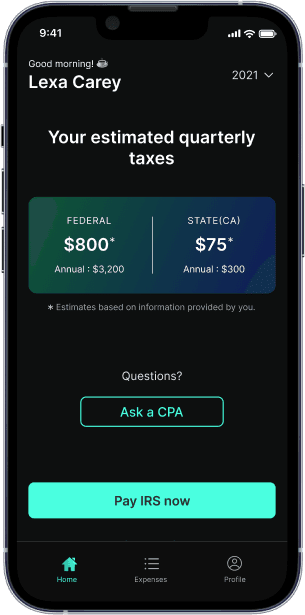
Quarterly tax deadline is Jan 15. See how much you owe penalties
1099 Tax Calculator

Are you self-employed?
This includes freelancers and business owners.
Understanding the DoorDash Tax Rate: Do Drivers Pay Taxes?
You are regarded as an independent contractor rather than an employee as a DoorDash driver. Knowing this difference is essential to comprehending your tax obligations. Independent contractors, like you, are in charge of paying your own taxes; employees do not have taxes deducted from their paychecks, so it is crucial to understand how to pay taxes on your earnings. For more information onself-employment, you can explore resources that explain your responsibilities.
Table of contents
Distinguishing Between an Independent Contractor and Employee (1099)
Let’s examine the distinctions between independent contractors and employees. Your filing status, such as single or married filing jointly, can also impact your overall tax obligations as an independent contractor. Your employer normally deducts federal and state income taxes from your paycheck when you work as an employee. Furthermore, your employer matches your Medicare and Social Security taxes, also referred to as FICA (Federal Insurance Contributions Act) taxes. As an employee, you therefore only pay half of the 7.65% FICA tax rate on your wages. However, you have the responsibility of paying both the employer and employee components of FICA taxes as an independent contractor. As a result, your overall rate ofself-employment taxis 15.3% of your net self-employment income. 12.4% goes toward Social Security, and 2.9% goes toward Medicare.
An explanation of DoorDash and self-employment tax
One of the biggest components of your tax obligations as a DoorDash driver is paying self-employment taxes. This is how it operates:
- Self-Employment Income: You can deduct any earnings you receive from driving for DoorDash from your total income.
- Rate of Self-Employment Tax: 15.3% is the self-employment tax rate; this amount includes 2.9% for Medicare and 12.4% for Social Security.
- Quarterly Estimated Taxes: If you anticipate owing $1,000 or more in taxes for the year, you must pay quarterly taxes as an independent contractor to avoid penalties. The following year’s April, June, September, and January 15th are the deadlines for thesequarterly payments.
How Much Should a DoorDash Driver Set Aside for Estimated Tax Payments?
It can be difficult to figure out how much you should save for taxes, but it’s necessary to make sure you’re paying the right amount and to avoid penalties. To assist you in estimating your tax due, follow these steps:
- Track Your Income: Make a note of every penny you receive from DoorDash.
- Calculate Your Net profits: To find your net profits from self-employment, deduct any company expenses from your overall earnings.
- Determine Your Tax Liability: To find out how much you owe in self-employment taxes, use the self-employment tax rate of 15.3%.
- Add Federal and State Income Taxes: In addition, you will have to pay income taxes at the federal and state levels on your earnings. State and federal income tax rates differ by state and depending on your income level.
Additionally, you should make quarterly taxes to avoid penalties and ensure you are paying the correct amount throughout the year.
Recognizing Gig Economy Workers' Tax Duties
While working in the gig economy might be lucrative, there are tax complexities to consider. The following are important ideas to remember:
- 1099 Forms: If you make more over $600 in a calendar year as a DoorDash driver, you will be sent a1099-NEC form. This document details your yearly income as well as any additional payments, including incentive payments, that you may have received from DoorDash.
- Tax Forms: To report your business revenue and costs, you must file Form 1040 along with Schedule C. Schedule SE filing may also be required in order to report self-employment taxes.
- Quarterly Estimated Taxes: You should pay estimated taxes every quarter if you anticipate owing $1,000 or more in taxes for the year. By doing this, you can stay out of trouble and make sure you’re paying your taxes.
- Seek professional tax advice: To ensure you are taking advantage of all eligible deductions and accurately filing your taxes, it is strongly recommended to consult with a tax professional.
DoorDash Driver 1099-NEC Form
An essential document for DoorDash drivers is the 1099-NEC form. What you should know is as follows:
- Who Receives a 1099-NEC?: If you make more than $600 with DoorDash in a calendar year, you will receive a 1099-NEC.
- What Information Does it Contain?: Your annual earnings and any additional payments you received from DoorDash, like incentive payments, are reported on this form.
- How to Use It?: You'll use this data to fill out Schedule C of your tax return, which is where you'll record your income and out-of-pocket costs.
Delivery Driver Self-Employment Tax and Business Expenses
One of the main parts of your tax obligations as a DoorDash driver is paying self-employment tax. This is how it operates:
- Self-Employment Income: You can deduct any earnings you receive from driving for DoorDash from your total income.
- Rate of Self-Employment Tax: 15.3% is the self-employment tax rate; this amount includes 2.9% for Medicare and 12.4% for Social Security.
- Quarterly Estimated Taxes: If you anticipate owing $1,000 or more in taxes for the year, you must pay estimated taxes every quarter as an independent contractor.
Calculating Your Taxable Income
As a DoorDash driver, calculating your taxable income is crucial to determine how much you owe in taxes. Your taxable income is the amount of money you earn from your DoorDash deliveries minus any business expenses you incur. Keeping track of your earnings and expenses meticulously will help you accurately calculate your taxable income and ensure you pay the correct amount of taxes.
Estimating Business Profit
Calculating Income Tax
Business Expenses and Tax Deductions
As a DoorDash driver, you are eligible to deduct certain business expenses on your tax return. This can help reduce your taxable income and lower your tax bill. Understanding which expenses are deductible and keeping detailed records can significantly impact your overall tax burden.
Common Business Expenses for DoorDash Drivers
Tax Management and Deductions Advice for DoorDash Drivers
It takes some preparation and effort to handle your taxes as a DoorDash driver. The following advice will assist you in navigating the process:
- Maintain Accurate Records: Maintain thorough records of your earnings and outlays, including mileage logs and invoices for costs incurred on behalf of your firm.
- Use a Mileage Tracker: You can more readily compute your mileage deduction and maintain accurate records of your company miles by using a mileage tracker.
- Deduct Business Expenses: You are able to write off a variety of business expenses, including phone bills, mileage, and other costs associated with working as a DoorDash driver.
- Pay Estimated Taxes: To avoid penalties, pay estimated taxes each quarter if you anticipate owing $1,000 or more in taxes for the year.
Final Thoughts
Knowing your tax obligations as a DoorDash driver is essential to avoiding fines and making sure you're paying the right amount. You can confidently navigate the complex world of gig economy taxes if you understand the differences between self-employment and employment taxes, as well as how to manage your taxes. To remain on top of your tax duties, don't forget to use a mileage tracker, keep correct records, and pay estimated taxes. You can take advantage of the perks of working in the gig economy without having to deal with tax season stress by learning how to manage your taxes as a DoorDash driver with the correct resources and information.
You may easily and confidently handle your taxes as a DoorDash driver by following these recommendations and remaining educated. If you have both1099 and W2 income in the same year, it's important to understand how to manage these different types of income for tax purposes.
What’s FlyFin?


Expert tax CPAs ensure 100%-accurate tax filing

A.I. finds every tax deduction, eliminating 95% of your work

On average users save $3,700